

The Amusement Industry’s Rising Stars: James Brown on Throughput, Operations and the Future of Park Performance
“Throughput is about preparation and engagement at every level. Small operational efficiencies compound into big results over a day. Attention to these details is what separates good rides from great rides”
James Brown
International Ride Training
Universal Orlando Resort
18th March
Blog
7 min read

Every generation of the amusement industry produces operators who see parks differently. They understand the day-to-day reality on the platform, the technical complexity behind the scenes, and the data that increasingly drives modern operations. These are the people who do not just run attractions, they look for ways to make them run better.
James Brown is part of that next wave. Starting in ride operations and moving into engineering and project work, he has worked across major parks including Universal and Six Flags, with experience ranging from opening new attractions to managing some of the most complex rides in daily operation. That combination of frontline experience and technical thinking gives him a clear view of where parks gain efficiency, where they lose it, and what the industry still gets right and wrong.
In this interview, James shares practical insights on ride throughput, guest behaviour, workforce management and the small operational decisions that have the biggest impact on performance. From dispatch intervals to staffing strategy, the conversation highlights how the next generation of leaders is approaching park operations with a stronger focus on data, efficiency and real-world practicality.
Prefer To Skip The Line? Use Our Fast Pass
One hundred percent. One of the biggest things I noticed is that attraction designers tend to be very optimistic about guest behaviour. We can train our teams to understand throughput and safety goals, but guests are not trained. They are on vacation, they relax, and sometimes move more slowly than expected.
Designs often assume the best-case scenario with maximum vehicles on the track or seamless boarding, but real-world conditions vary. Maintenance, accessibility needs, and unexpected slowdowns all impact operations. The key is planning for these scenarios. For example, some attractions cleverly use their loading stations as dual load and unload points when there are fewer vehicles, saving time and reducing bottlenecks.
Even small touches, like clear automated instructions in queues or themed spiels that also provide boarding guidance, can prepare guests and make operations more efficient and safer. Ultimately, it is about setting expectations, providing subtle guidance, and designing infrastructure that handles real human behaviour. At the end of the day, people are people, and any system that acknowledges that will run better.
Question 2: What operational challenges come with running technically complex rides day after day that guests rarely see, and how do those challenges differ when launching a brand-new attraction??
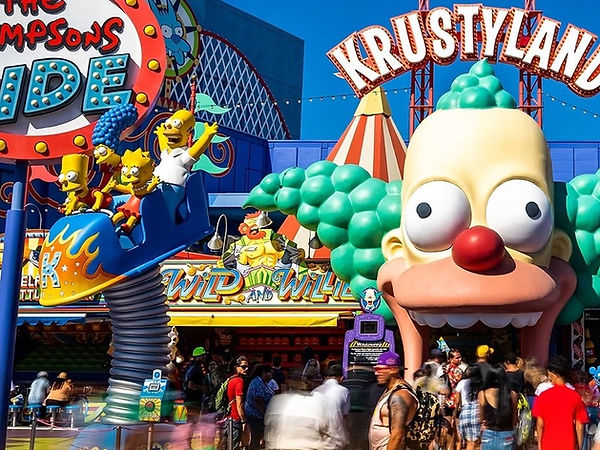
Honestly, many of the challenges are similar across attractions. Safety, capacity, and guest behaviour are always factors, and it is important that teams are motivated and trained to handle them. Scale is what often changes. As rides become more technically complex, loading procedures, communication, and infrastructure become increasingly important. I like to use the term efficiency infrastructure. It is about ensuring guests know where to move and what to do. For example, The Simpsons Ride has three floors and multiple pre-shows for each vehicle. Guests need to be prepared and informed, so operations run smoothly. Clear guidance and effective communication with technical services partners are also essential. Complex rides can experience more frequent faults, and having a good understanding of the technical basics helps teams anticipate issues, manage guests, and delegate tasks quickly.
Experience is the best teacher. Maintaining logbooks of faults and how long they typically take to resolve allows team members and leadership to respond efficiently. For rides with many vehicles, like The Simpsons Ride with 24 vehicles, knowing whether a fault affects one vehicle or the whole floor is critical. It enables quick decisions on rerouting guests or adjusting operations. When opening a new attraction, commissioning is key. For Dr. Diabolical’s Cliffhanger, we ran 40 hours of testing with short maintenance breaks. This identifies recurring faults and operational improvements before guests arrive. Often, the ride is in maintenance mode during testing, which bypasses certain sensors. Switching to full operation reveals how the ride will perform in real conditions. Rides with more vehicles tend to have more issues, which makes monitoring and preparation even more important. Understanding these operational realities ensures rides run efficiently and safely, even under complex conditions.
Question 3: When a new attraction opens, success isn’t just guest excitement. From an operations perspective, what metrics actually tell you the ride is performing the way it should?
To measure a new attraction’s success from an operations perspective, you need to combine guest satisfaction with uptime metrics, wait times, and throughput. Each attraction should have clear operational targets, ideally as close to 100% uptime as possible, though realistically 95 to 97% is a strong goal. From there, throughput goals show whether the ride is moving the right number of guests each hour.
“You want something that guests feel is worth waiting for, while at the same time meeting its throughput goals so lines move efficiently and everyone has a great experience"
Wait times can also be telling. A consistently low wait may indicate guests don’t perceive value in the attraction, while long lines that aren’t translating into throughput show the ride isn’t running efficiently. The ideal balance is a ride that guests want to experience, with lines that reflect demand, while throughput remains high and wait times stay reasonable. When all three factors are hitting their targets, that’s when you know the attraction is truly successful.
Question 4: You implemented an incentive system that increased venue capacity by around 30%. What was the real problem you were trying to solve, and what did that experience teach you about improving throughput without pushing teams into unsafe shortcuts?
The core challenge in operations is motivation. A more motivated team is a safer and more efficient team. That energy flows to the guests, who then move more quickly and engage with the attraction properly. One of the biggest lessons we learned is that engaging the team first is key.
“In order for the guests to be engaged, your team members have to be engaged first.”
We created a team member motivation campaign with friendly competition and points for hitting throughput goals. Before introducing the competition, we ran short efficiency classes to train staff on how to engage with guests, help them prepare for the ride and use restraints correctly. This ensured that improvements came from better preparation and guest engagement, not unsafe shortcuts. We also rewarded punctuality and accountability. Teams earned or lost points based on attendance and readiness for their shifts. By combining clear training with incentives, the team was excited, guests were set up to succeed, and throughput increased by around 30 per cent without ever compromising safety. It was a clear demonstration that setting expectations works best when paired with guidance and support.
Question 5: Even in well-run parks, where does ride throughput most often get lost through small operational inefficiencies that add up over the course of a day?
Throughput can be lost in small, often overlooked ways that add up over the course of a day. One of the biggest areas is loose articles. Many parks have bins or cubbies in a single spot on the ride platform, which creates bottlenecks. Guests exiting the ride pass in front of those putting items away, while new riders move across the same space. Simple changes, like moving bins off the wall or breaking them into smaller sections across the platform, can save 10 to 15 seconds per dispatch. That adds up to hundreds of extra guests per hour.
I also use the term efficiency infrastructure to describe how every operational detail matters. For example, gates should open immediately as the train parks. All positions on the team should contribute, from groupers preparing guests for the ride by checking bags, shoes and hats in advance, to team members at the front checking restraints as soon as possible. Every small action contributes to smoother operations and higher throughput.
Question 6: When an attraction unexpectedly goes down, the clock starts immediately. What does effective troubleshooting look like in those first critical minutes?
Effective troubleshooting starts with communication, foresight and knowledge. Operations staff need to understand what is happening just as much as maintenance teams. You do not have to know how to fix the issue immediately, but you should know what is going on and the steps that will need to be taken. This allows for productive conversations and quicker action.
“Operations people may not fix the issue themselves, but knowing what is happening from the start allows the team to act fast and keep guests safe.”
Being fully alert and attentive is also critical. I like to use the term G-A-A-G:
-
Get gates open immediately
-
All positions involved
-
Alert and attentive
-
Get to the front
That means stopping side conversations and making sure the team is focused and in the right headspace. Attention in those first minutes ensures that decisions are made quickly, guests are managed effectively, and operations can respond efficiently.
Question 7: As parks collect more operational data and experiment with AI-driven tools, where could better real-time insight make the biggest difference for operators on the ground?
Workforce management is one of the biggest areas where better real-time insight can make a difference. Understanding guest flow data allows operators to see where people actually go when the gates open, rather than staffing every area the same way. In most parks, there are always a few attractions that guests head to immediately, while other areas stay quiet early in the day. If you know that in advance, you can staff those high-demand rides at full capacity from the start and bring other areas online later.
“Once you’ve built a line, you’ve already lost the battle. Even if you add capacity later, you spend the rest of the day trying to catch up.”
That early decision matters because queues compound. If more guests enter a line than you can process in the first hour, the wait keeps growing, and it becomes very difficult to recover later, even if you add trains or more staff. Real-time insight helps operators stay ahead of that curve instead of reacting to it.
This applies across the park, not just attractions. Food and beverage, retail and other areas all benefit from understanding where guests are moving and when demand shifts. With good data, parks can reallocate labour, reduce unnecessary staffing in quiet areas, and increase capacity where it actually matters. The result is better efficiency, lower cost, and a smoother experience for guests without needing to push teams harder.
Question 8: Looking across the industry today, where do you think parks are leaving the most operational performance on the table?
A lot of it comes down to efficiency infrastructure and demand-based workforce management. Parks are getting better at both, but there is still a lot of performance being left on the table because staffing and operations are often applied too broadly instead of being adjusted based on real conditions. If you can predict guest flow and understand where people actually go during the day, you can scale staffing up or down by attraction, by location and by time of day instead of treating the whole park the same.
“You don’t need the same staffing everywhere at the same attendance level. Look at each attraction individually and staff based on where the demand really is.”
That might mean fully staffing one ride early in the day because it always gets flooded with guests, while another only needs extra coverage for a few hours in the middle of the day. The same thinking applies to food and beverage, retail and every guest-facing area. When schedules are built around real demand instead of fixed rules, parks can reduce labour where it is not needed and put more resources where it actually improves capacity.
Efficiency infrastructure is the other big opportunity. Small changes to how guests move through a station, where loose articles are stored, or how loading is organised can save seconds on every dispatch. Those seconds turn into more cycles per hour, more guests through the attraction, and more spending across the park. Even minor adjustments can pay for themselves quickly when they increase hourly capacity.
Across the industry, the parks that combine better data with smarter infrastructure decisions are the ones that unlock the most operational performance.
Final Thoughts
The biggest performance gains in modern parks are not just about bigger attractions, but about better operations. Throughput, staffing, guest flow and small efficiency improvements all add up, and the parks that pay attention to those details consistently outperform the ones that don't.
What stands out with leaders like James Brown is the ability to see both the operational and technical side at the same time. Experience on the platform, combined with an understanding of engineering and data, leads to smarter decisions and more efficient parks. Problems are not just fixed, they are prevented through better design and better planning.
This reflects a wider shift across the industry. The next generation of leaders is more focused on data, efficiency and real-world performance, and less reliant on tradition or guesswork. As parks grow more complex, that mindset will play a bigger role in shaping how the industry operates in the years ahead.
Thanks for reading! Keen to know more? Check out RideFlow, ride analytics for amusement parks and water parks.